About
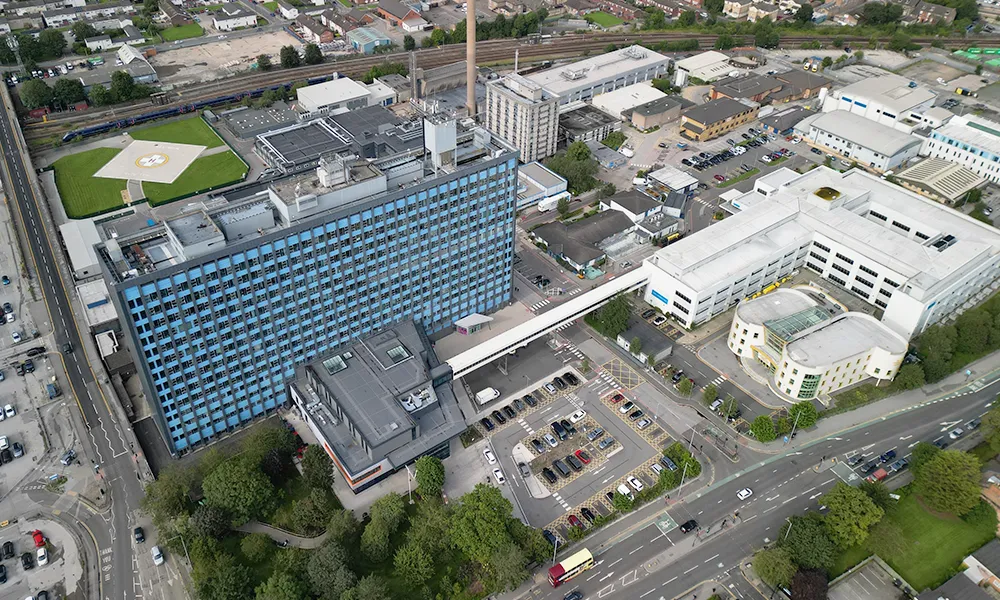
Formed in 2013, the NHS Property Services manage 2,700 properties with 6,300 customers across England, which accounts for approximately 10% of the total NHS estate. Their properties range from listed buildings to new integrated care centres and include hospitals, GP practices and offices.
The team partnered with Integrated Care Boards and local NHS organisations to help them plan and manage their estates to unlock greater value and ensure every patient can get the care they need in the right place and space for them.
Ambitions
NHS England plans to achieve net zero carbon status by 2040. It is supported by NHS Property Services’ ambitious Green Plan, which focuses on decarbonising the NHS estate, supporting customers in their transition to net zero, and helping the NHS adapt to mitigate the impact of climate change.
The NHS Property Services asked us, working with Faithful & Gould, to review and recommend energy savings and carbon footprint reduction opportunities for 4,000 NHS primary care facilities to support their drive to decarbonise.
The project
We conducted site surveys at a representative sample of 5% of the estate, and our findings were aligned with stored data sets. This enabled us to develop an estate-wide model of economic and carbon emission-saving opportunities for energy retrofits.
This financial model was used to create the business case to support the investment strategy. The strategy included opportunities for various technology retrofits, including solar, heat pumps, controls, smart meters and battery and thermal storage.
Results
We identified both:
- An average of 216 TCO2e reduction per NHS site
- An annual cost saving per site.
The business case for the NHS calculated carbon emissions savings of 55%, and showed the capital investment could be paid out of annual cost savings.
With visualisation of the carbon and financial savings available, NHS property services embarked upon a long-term energy retrofit of the estate that is currently ongoing.
Conclusions
Cost savings
Our team identified that an investment in energy retrofits for each primary care site could created annual costs savings, generating a 7.5 year payback and further savings each following year.
Stakeholder Reassurance
The economic and emissions models created from the pilot project helped to prove the commercial and social impact to the Property Services Board, so that the retrofits could be pursued.
Moving to a more eco-friendly approach meant that the NHS can maximise the use of their budgets whilst reducing their carbon footprint to develop efficient, sustainable buildings are fit for the future.