The UK needs more cooling. Are we planning the infrastructure for it?
Hotter summers are changing what UK buildings need from their energy systems. Explore how heat pumps can support future heating and cooling requirements.




The UK’s first large-scale wastewater heat recovery project enabled Borders College to reduce gas use, cut carbon emissions and modernise its heating infrastructure—with minimal capital outlay.
Borders College wanted to reduce its reliance on gas and lower the carbon impact of heating its Galashiels campus.
The estate presented a significant challenge. Three very different buildings—including a Victorian textile mill—were served by five plant rooms containing ageing gas boilers.
The college needed a renewable solution that could work with its existing infrastructure without creating major disruption or requiring substantial upfront investment.

Several innovations were assessed:
Heat pumps offered the most practical route to converting local low-grade heat into usable energy.
A sewer running behind the college provided a reliable source of wastewater heat. Even during winter, the wastewater typically remained at around 20°C.
A heat exchanger captures this energy before heat pumps raise it to a suitable temperature. The heat is then distributed around the campus through an underground network, with the existing gas boilers retained as backup.
HI Group led the technical design and project management, bringing together the engineering, commercial and funding elements needed to make the project deliverable.
Our work included:
We did more than simply design a low-carbon system. We helped create a commercially viable route to delivery.
The project used a funded heat supply model developed with HI Group’s corporate finance expertise.
Instead of making a major upfront capital investment, Borders College purchased heat through a commercial supply agreement.
This allowed the college to begin reducing emissions while limiting its capital commitment and transferring commercial risk to the technology and funding partners.
The result was a competitive heat price, lower financial exposure and access to renewable heating infrastructure that may otherwise have been difficult to fund.
The project became the first in the UK to use wastewater heat recovery at this scale.
It combined:
The combination of innovative engineering and commercial finance turned an ambitious decarbonisation concept into a deliverable project.
As a pioneering project, the system required several practical modifications:
Sewer debris
Additional screening and filtration were installed to manage wipes and other solid waste.
Lower summer flows
A recirculation solution allowed wastewater to pass through the system several times, improving heat extraction.
Extreme cold conditions
Automatic controls enabled the system to switch to gas backup when required.
Since launching in December 2015, the system has:
The project demonstrated that ageing and complex estates can be decarbonised without replacing every part of the existing heating infrastructure.
Borders College has continued to explore opportunities to improve the system, including:
Borders College has continued to explore opportunities to improve the system, including:
– Pete Smith, Principal & CEO, Borders College
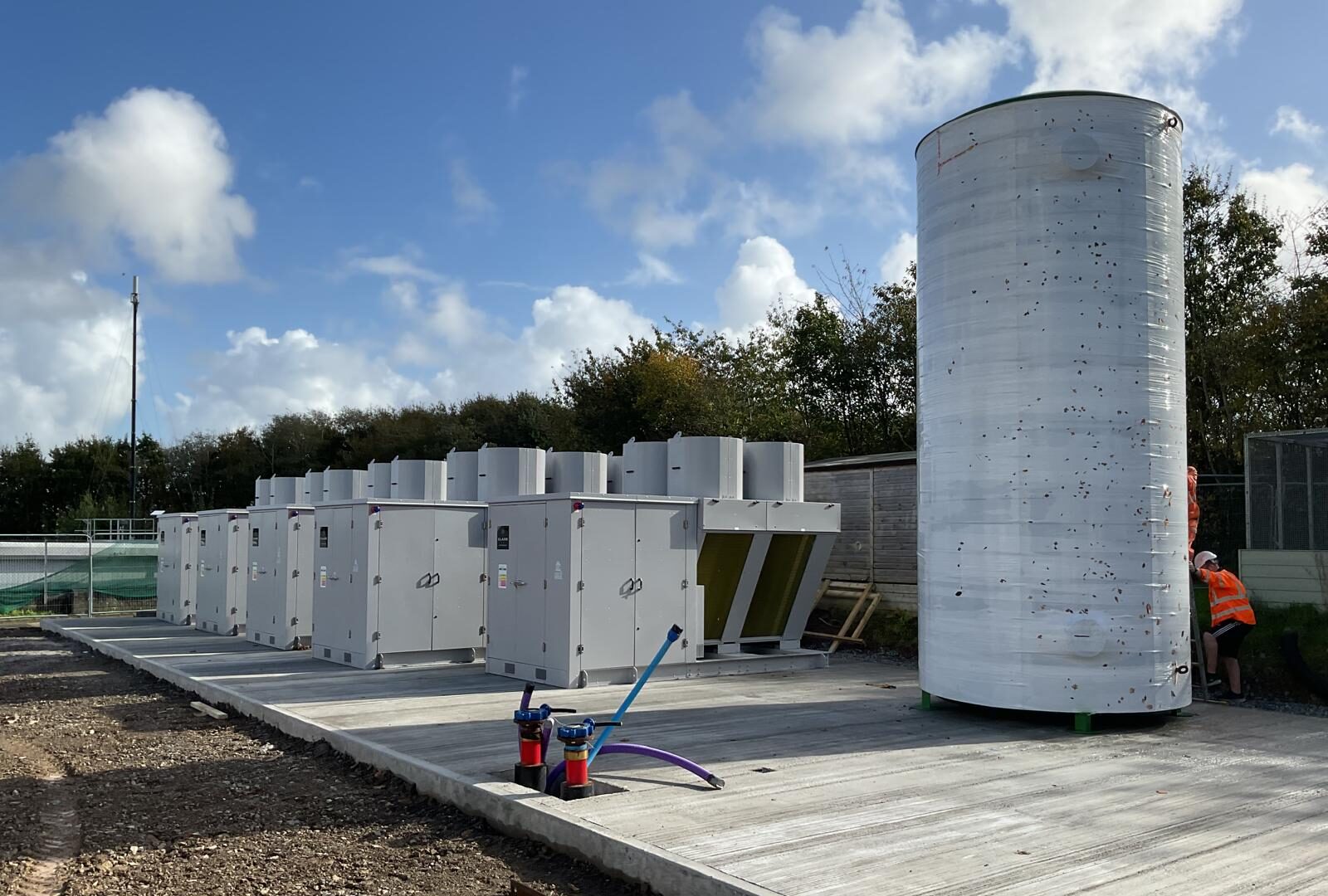
Hotter summers are changing what UK buildings need from their energy systems. Explore how heat pumps can support future heating and cooling requirements.

Learn how an engineering-led investigation uncovered system conflicts, improved operational performance and identified opportunities to reduce annual gas consumption by up to 33%.
Discover how HI Group helped MidKent College replace gas heating, install renewable energy systems and deliver large-scale estate decarbonisation across two campuses.